

Executive assistants
Executive assistant duties: a daily and weekly checklist
What an executive assistant does: calendar and appointments, calls and email, meeting preparation, travel and reporting. With a practical daily and weekly checklist.
Short answer: An executive assistant manages an executive's calendar, appointments, phone and email traffic, meetings and travel, and prepares correspondence and reports. The real job of a good assistant is to protect the executive's time and to make sure nothing gets lost along the way.
The core duties of an executive assistant
These are the duties that appear most often in job descriptions:
- Calendar and appointments: Scheduling meetings, avoiding conflicts and leaving breathing room in the executive's day.
- Calls and requests: Logging incoming calls, noting who wants what, and managing the call-back list.
- Email and correspondence: Prioritizing the inbox and drafting replies and letters.
- Meeting preparation: Agenda, attendee list, documents and meeting notes.
- Travel planning: Transport, accommodation and the travel itinerary.
- Contacts and relationships: Keeping details of partners, clients and organizations up to date.
- Filing and archiving: An orderly archive for contracts, correspondence and documents.
- Reporting: Weekly summaries of calls and appointments, and a list of open items.
Daily checklist
Ten minutes of checking every morning and evening saves most of the day.
Morning
- Review today's appointments and meetings: is any location, attendee or document missing?
- List yesterday's requests that still need a call back.
- Give the executive the day's schedule on a single page.
- Check the tasks that are due today.
During the day
- Log every call and visit request with name, title, phone number and subject.
- Keep the status of each request current: new, appointment scheduled, call back, called back, done.
- Write down the executive's promises as tasks.
Evening
- Mark the requests and call-backs that are still open.
- Check tomorrow's schedule and set reminders where needed.
- Record any remaining notes so you don't carry open loops into the next day.
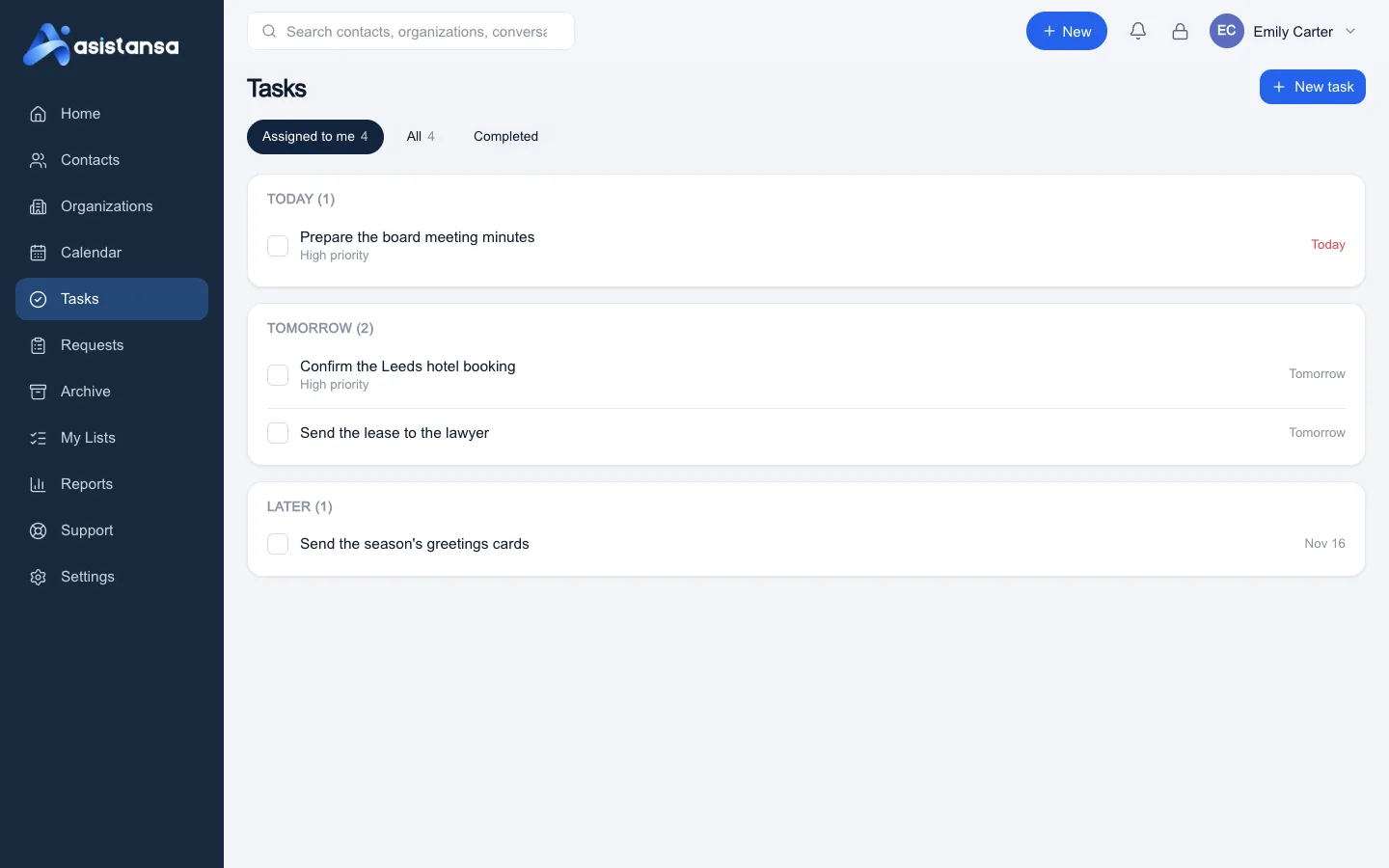
Weekly checklist
- Go through next week's calendar together with the executive.
- Produce the weekly report of calls and appointments.
- Check upcoming important dates (birthdays, anniversaries, holidays).
- Update changed job titles and phone numbers in your contacts.
- Follow up on unfinished tasks with their owners.
The most common mistakes
- Keeping notes in a personal notebook: The information is lost during leave or a handover.
- Not logging requests that come in by phone: A call left for "I'll write it down later" is usually forgotten.
- Only one person knows the calendar: If the executive and the team don't look at the same calendar, conflicts are inevitable.
- Leaving sensitive information unprotected: ID numbers, passport details and passwords don't belong in a spreadsheet or an email.
Which tools make the job easier?
The right tool connects the phone note, the appointment, the task and the report. Asistansa was built for exactly this: an incoming call is logged as a request, a scheduled appointment lands in the calendar, follow-up work is assigned to a teammate as a task, and at the end of the week the report is exported to Excel or a landscape PDF. The daily appointment card can be printed, and the iPhone and Android apps give access to the same records on the go.
Sensitive details have their own vault: ID numbers, passport details and passwords live there, and you decide who can see them. All content is encrypted on the device.
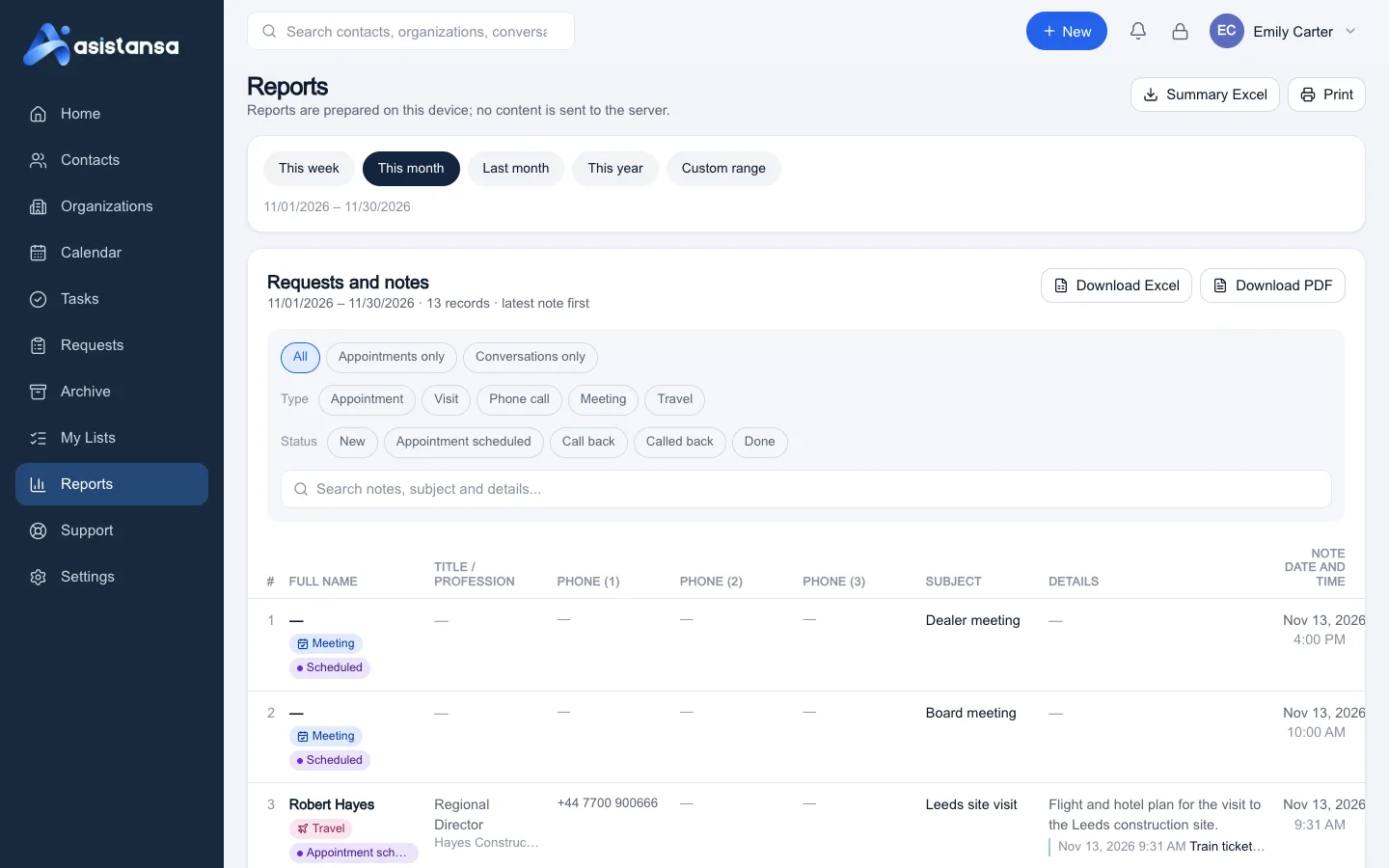
In short
Executive assistance is about order and continuity. Logging every request, keeping every appointment in a single calendar and turning every promise into a task also builds the executive's trust in you.
Frequently asked questions
What does an executive assistant do?
An executive assistant manages the executive's calendar, appointments, phone and email traffic, meetings and travel, and prepares correspondence, documents and reports.
What skills does an executive assistant need?
Strong written and verbal communication, time management, prioritization, discretion, careful record keeping and confident use of office software are the most sought-after skills.
How should an executive assistant keep track of daily work?
Check the day's appointments and pending call-backs in the morning, log every request during the day, and review open items and tomorrow's schedule in the evening. A single system that connects requests, the calendar and tasks is the most efficient way to do this.